


In the intricate landscape of industrial automation, where precision and communication are paramount, the term “Encoder” stands as a technological cornerstone. From its fundamental role in digital communication to its application in various industries, this article explores the multifaceted facets of encoders, delving into their definitions, types, and the crucial role they play in modern automation systems.
Understanding the Basics: What is an Encoder?
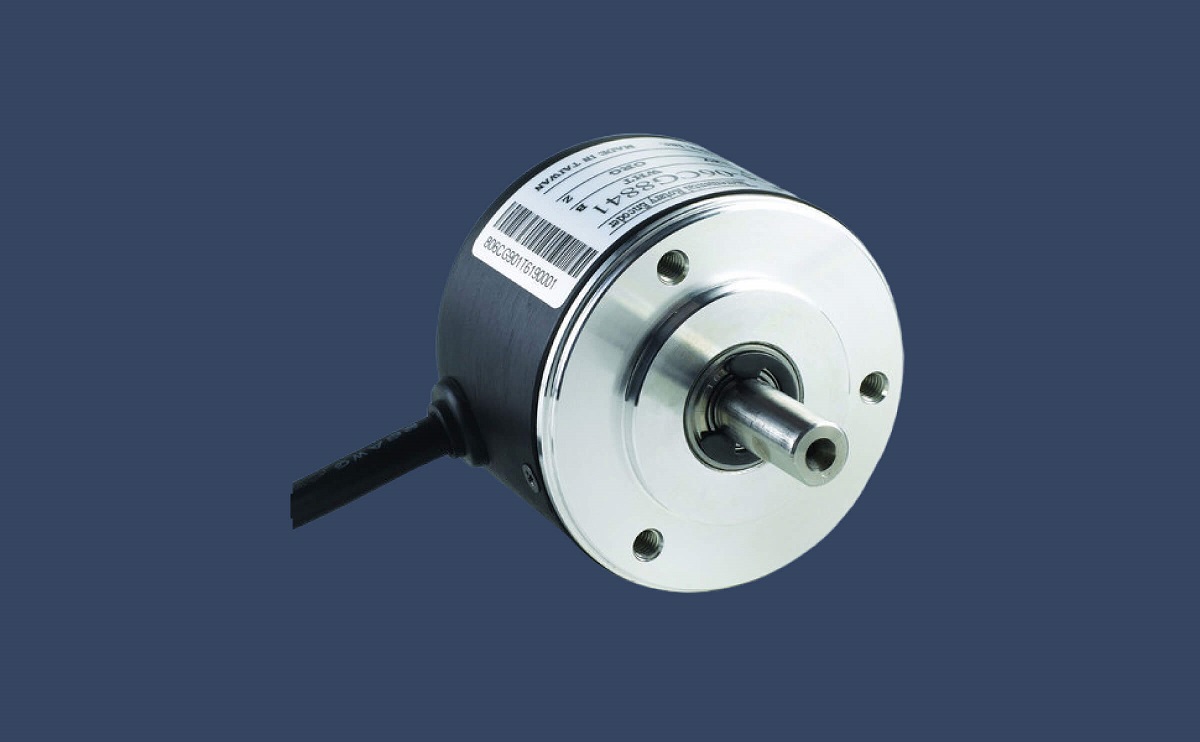
At its core, an encoder is a device or algorithm that converts data from one form to another. In the context of industrial automation, encoders play a crucial role in translating mechanical movements into digital signals, allowing for accurate position feedback and control in machinery.
Decoding the Fundamentals: Encoder and Decoder Dynamics
The relationship between an encoder and a decoder is akin to a symbiotic dance in the world of information technology. While an encoder converts data into a specific format, a decoder performs the reverse operation, translating the encoded data back into its original form. Together, they facilitate seamless communication in various digital systems.
Exploring the Lexicon: From Encoding to Decoding
Encoding Definition and Types
In the broader spectrum, encoding refers to the process of converting information into a specific format for transmission, storage, or interpretation. Various types of encoding exist, such as base64 encode, which transforms binary data into ASCII characters, and URL encode, which replaces certain characters with a ‘%’ followed by their ASCII code.
Deciphering the Differences: Encoding vs. Decoding
To comprehend the essence of encoding, it’s crucial to understand the difference between encoding and decoding. While encoding involves converting information into a specific format, decoding is the process of reversing that transformation. This duality is fundamental in ensuring accurate communication and data interpretation in digital systems.
In the Context of Communication: Encoding in Communication
The significance of encoding expands into the realm of communication. In the process of encoding and decoding in communication, information is transformed into signals that can be easily transmitted and understood. This process is fundamental in telecommunication, ensuring that data can traverse various channels without loss or corruption.
Navigating the Landscape: Huffman Encoding and Beyond
In the realm of data compression, Huffman encoding emerges as a powerful algorithm. By assigning shorter codes to more frequent data, Huffman encoding reduces the overall size of transmitted or stored information. This efficiency makes it a go-to choice in scenarios where bandwidth or storage space is a critical consideration.
Beyond Binary: One Hot Encoding and Communication Advancements
As industrial automation evolves, so do the techniques employed in encoding. One hot encoding is a prime example, where categorical data is represented as binary vectors. This approach enhances the efficiency of machine learning algorithms, contributing to the development of intelligent systems in automation.
In the Mechanism of Machines: Rotary Encoders and Precision Control
In the mechanical realm, precision is paramount. Rotary encoders provide a mechanism to precisely measure the position and speed of rotating objects. Their application spans from robotics and CNC machines to various automated systems, where accurate feedback is essential for optimal performance.
Optimizing Communication: Run Length Encoding and its Applications
In scenarios where data redundancy is prevalent, Run Length Encoding (RLE) offers an elegant solution. By compressing consecutive repeated data into a single value and count, RLE optimizes storage and transmission efficiency. This technique finds applications in image compression and data transmission.
The Digital Frontier: Encoders in Digital Electronics
The marriage of encoders and digital electronics is fundamental to modern technology. From 3-pin rotary encoders to complex 16×4 encoders, the world of digital electronics relies on these devices for tasks ranging from simple position sensing to intricate data processing.
Navigating the Digital Wave: Adobe Media Encoder and its Role
In the realm of media processing, Adobe Media Encoder is a pivotal tool. It facilitates the efficient encoding of multimedia files, ensuring compatibility and optimal performance across various platforms. This not only simplifies the workflow for content creators but also enhances the overall user experience.
Looking Ahead: The Future of Encoding and Industrial Automation
As we delve into the intricacies of encoding, it becomes evident that its role in industrial automation is not static. Advancements in technologies like AV1 hardware encoding and AV1 hardware encoder are shaping the future, promising even greater efficiency, speed, and precision in communication and control systems.
Conclusion
In conclusion, encoders serve as the architects of precision in the world of industrial automation. From their fundamental definitions to their diverse applications in digital electronics, communication, and media processing, encoders are the unsung heroes ensuring the smooth operation of modern technologies. As industries continue to evolve, understanding and harnessing the power of encoders will be pivotal in pushing the boundaries of what’s possible in the realm of automation and technology.